

Iron Infusions in Pregnancy and Postpartum: What You Need to Know
Iron Infusions During and After Pregnancy
What you need to know abut iron infusions during pregnancy and postpartum including if you may need one, when is the best time and what to expect.
Your Iron Levels Matter More Than You Think — Especially Right Now
Iron deficiency is the most common nutritional deficiency in pregnancy, and one of the most under-addressed. You might feel bone-tired, short of breath, or foggy in a way that doesn't quite match the usual "pregnancy exhaustion" narrative. And often, bloodwork tells the real story: low ferritin, low hemoglobin, iron stores that oral supplements just can't keep up with.
At Atheria Wellness, we see this daily. And the most consistent piece of advice our practitioners give? Don't wait until after delivery to address it.
Here's what you need to know about iron infusions in pregnancy and postpartum including when to get one, why timing changes everything, and what actually happens at your appointment.
Why Iron Demands Skyrocket in the Second Half of Pregnancy
Your body's iron needs roughly double in the second half of pregnancy. You're producing more blood, your baby is pulling iron for their own development, and many of the usual ways the body absorbs nutrients become less reliable. For anyone who already had lower iron stores going into pregnancy, whether from heavy periods, a restricted diet, or a previous pregnancy, this is where things can unravel quickly.
Low iron in pregnancy is linked to fatigue severe enough to interfere with daily functioning, increased risk of preterm birth, and poorer outcomes for both mother and baby. Getting iron levels into a healthy range before delivery is where the real benefit lies.
Oral iron supplements work for some people. But nausea, constipation, and poor absorption make them unreliable for many, especially during a time when the digestive system is already under pressure. IV iron bypasses all of that, delivering iron directly into the bloodstream where it can be used immediately.
When to Start Iron Infusions in Pregnancy
Pregnancy consults at Atheria typically begin around week 20, with most clients needing between two and four infusions spread across the second and third trimesters.
Starting early matters for a practical reason: iron takes approximately six weeks to fully integrate into the body. An infusion at 38 weeks, three days before a planned C-section, may not do much before delivery and blood loss during birth will deplete iron stores regardless. Infusions given earlier in pregnancy allow iron levels to stabilize, which translates directly to better maternal and fetal outcomes.
Atheria sees clients from approximately 14 weeks onward, depending on individual labs and clinical assessment. If your bloodwork shows low ferritin (generally below 100) and you're experiencing symptoms like persistent fatigue, dizziness, or shortness of breath, a referral or self-referral for an infusion consult is worth pursuing sooner rather than later
What to Expect at Your Appointment
The process starts with a consultation. A Nurse Practitioner reviews your recent lab results, pregnancy history, and symptoms to determine whether IV iron is appropriate and to build a personalized treatment plan.
The infusion itself takes place in a warm, calm, clinical setting. Appointments run between 60 and 90 minutes. A registered nurse monitors you throughout, and most patients tolerate the treatment well. You can read, rest, or just decompress while the IV does its work.
Many patients notice improvements in energy within one to two weeks of their first infusion. Most patients will require two to four sessions to reach optimal levels, spaced at least one week apart.
You'll need current bloodwork before your first appointment. If you don't have recent labs, we can help guide you through what to ask for in your requisition.
Postpartum Iron Infusions: A Different Conversation
Delivery can sometimes involve significant blood loss. For patients who came in with already-low iron levels, or who had a more demanding birth, postpartum iron deficiency is common and real.
The good news: postpartum care is a different clinical scenario, and it comes with a treatment option that's often better suited to a new parent's life.
During pregnancy, Atheria uses Venofer (iron sucrose), a formulation that is safe and well-studied for use in the second and third trimesters. After delivery, Monofer (ferric derisomaltose) becomes an option. Monofer is typically administered as a single infusion — once per year for many patients — rather than a multi-session protocol. For someone managing a newborn, that difference matters.
The clinical recommendation, from Atheria's perspective, is still to address iron deficiency before delivery if at all possible. Better maternal iron levels going into birth are associated with better outcomes for both mother and baby. But for patients who delivered before getting ahead of their iron, or who had unexpected blood loss, postpartum infusions are absolutely appropriate and effective.
Venofer vs. Monofer: What's the Difference?
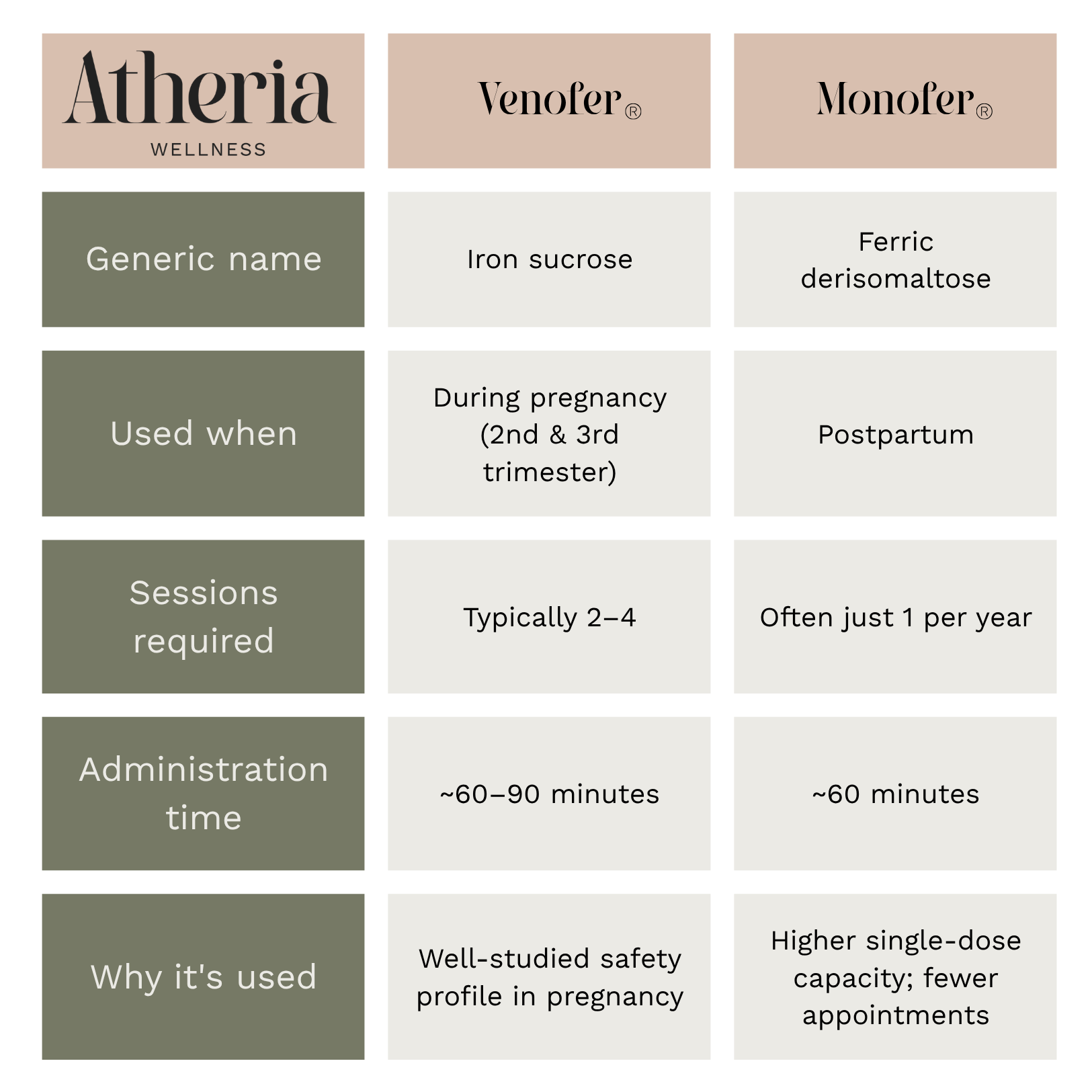
Venofer (iron sucrose) is used during pregnancy — typically administered across multiple sessions spaced at least one week apart, making it well-suited to a prenatal treatment plan.
Monofer (ferric derisomaltose) becomes an option after delivery and is often given as a single annual infusion, making it significantly more practical for postpartum patients managing life with a newborn. Both are administered by registered nurses at Atheria Wellness under nurse-practitioner supervision.
Should I Get an Iron Infusion Before or After Delivery?
The short answer: before, if at all possible.
Fetal iron demand doubles in the second half of pregnancy. Studies consistently show better maternal and fetal outcomes when iron levels are restored prior to delivery. Blood loss during birth — whether vaginal or surgical — depletes stores further, and starting postpartum in a depleted state makes recovery harder.
That said, postpartum iron treatment is genuinely useful for patients who missed the window, had unexpected complications, or are dealing with ongoing depletion after delivery. The goal at Atheria is to meet patients where they are and provide evidence-informed care regardless of timing.
If you're postpartum and struggling with fatigue, slow recovery, or symptoms of anemia, an iron infusion may help — and Monofer's single-infusion option makes it significantly easier to fit into life with a newborn.
Who Is a Good Candidate?
You may benefit from a pregnancy or postpartum iron infusion if you have:
Lab results showing low ferritin (typically below 100)
Persistent fatigue, dizziness, shortness of breath, or heart palpitations
Difficulty tolerating or absorbing oral iron supplements
A multiple pregnancy, previous iron deficiency, or restricted diet
Significant blood loss during or after delivery
A virtual consultation with a Nurse Practitioner at Atheria is the starting point. They'll review your bloodwork and pregnancy or postpartum history to determine whether IV iron is appropriate for you.
Book a Consultation at Atheria Wellness, Toronto
Atheria Wellness is located at 3074 Bloor St. West, Etobicoke, and has administered over 1,500 infusions to date. Our team includes experienced registered nurses and nurse practitioners with deep expertise in iron infusion therapy for pregnancy, postpartum, and beyond.
Getting started is simple — you can book in directly online for a virtual consultation through our website. Same-day and flexible scheduling is often available. No referral is required.
Book a Pregnancy or Postpartum Iron Infusion Consultation → Call us: 647-619-4766
Frequently Asked Questions
Can I get an iron infusion right before my due date? Infusions can technically be administered close to delivery, but iron takes approximately six weeks to fully incorporate into the body. If you're within a few days of your due date and blood loss occurs during birth, much of that iron will be lost before it has a chance to work. Earlier treatment is significantly more effective.
Is IV iron safe during pregnancy? Yes. IV iron therapy during the second and third trimesters is considered safe and effective when administered by qualified healthcare providers. Atheria uses formulations that have been extensively studied in pregnancy, under nurse-practitioner supervision with full medical oversight.
How is postpartum treatment different from pregnancy treatment? The primary difference is the medication. During pregnancy, Atheria uses Venofer (iron sucrose), which requires multiple sessions. After delivery, Monofer becomes an option — it's often administered as a single annual infusion, which is considerably more practical for new parents.
Do I need a doctor's referral? No, however you will require blood work within the last 90 days to complete your consultation. You can book a consultation directly through the Atheria website. A Nurse Practitioner will review your labs and determine whether treatment is appropriate.
Note: This blog is for educational purposes and does not constitute medical advice. IV iron therapy requires clinical assessment and a valid prescription. Always consult a qualified healthcare provider regarding your individual care.